Small stages
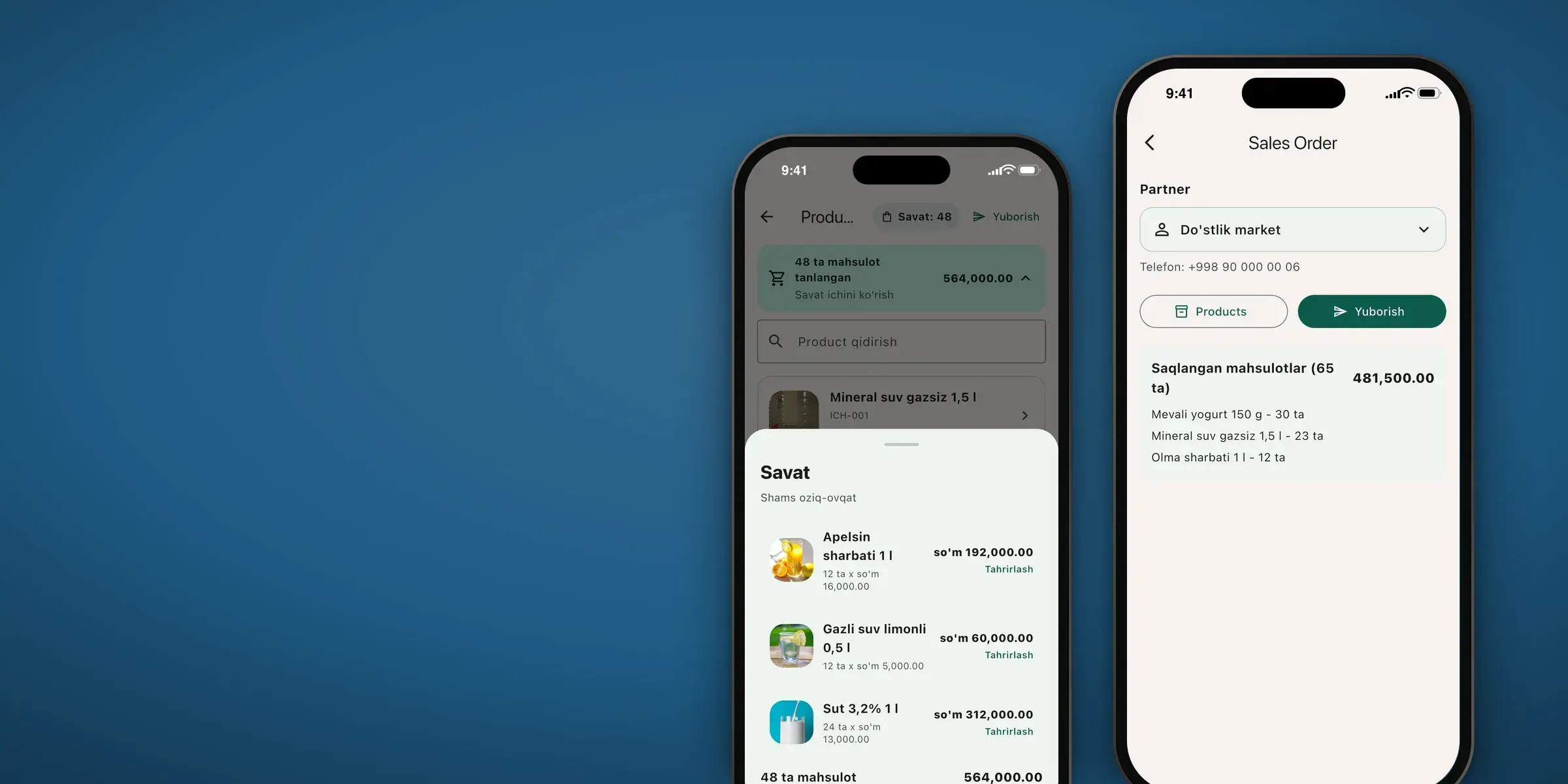
At DeepVision, visits and GPS came first, the sales module in the final stage.
The stages and their cost are agreed in the proposal before work starts.
Free discovery callDay 1
You get
Task summary and next step
Days 3–5
You get
Process map
Day 7
You get
Stages, price and timeline
Day 14
You get
Contract and stage plan
At DeepVision, visits and GPS came first, the sales module in the final stage.
Progress and results of each stage are reviewed together with you.
Blitz has 107 test files in the student app and 228 in the backend, ONUR has 83.
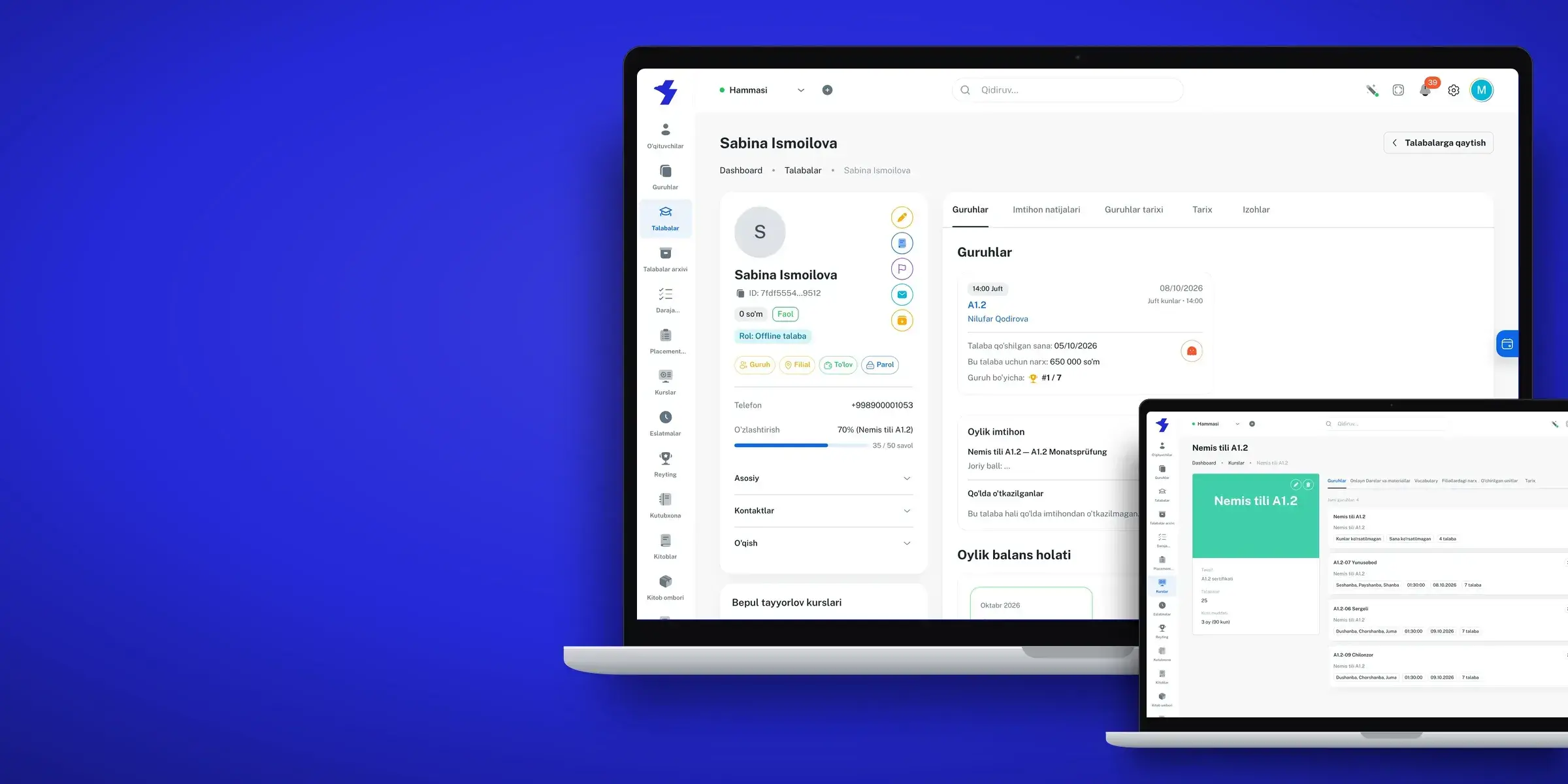
Blitz moved its students and payment history over from ModMe. In November the system is handed over to the client’s own team.
Who owns them is agreed in the contract.
Depending on the client: it only covers not disclosing your information.
The stages and their cost are agreed in the proposal.
Support after launch and its terms are agreed separately.
No, it is free. Both the first call and the diagnostic that follows are free: we review the process in depth and give you a roadmap, stages, cost and risks.
No. Once you have the proposal, you decide whether to start or not.
The scope and timeline of each stage are set out in the proposal. We plan the first stage as the smallest piece that delivers a working result.
The way we communicate is agreed before work starts. Progress and results of each stage are reviewed together with you.
This is agreed in the contract, which sets out who owns the code, documentation and IP. In November, we’re handing the Blitz system over to the client’s own team.
App development splits into two parts. The first comes before kickoff: a call, a diagnostic, a proposal. This is where it becomes clear what we’re building, what it costs and in what order we’ll do it. The second comes after kickoff: the work is split into stages, and each ends with a working result.
Below is what you get at each step and what we need from you.
On the call, we ask which systems you work in (1C, Odoo, amoCRM, Excel, Telegram), which process takes up the most time and how you’ll measure the result.
If we see the task isn’t for us, we’ll say so. For example, when off-the-shelf software is enough.
What we need from you: Someone who knows the process, and a couple of examples from 1C or your CRM as they are today.
We review the process online or on site: who does what, which system holds the data, where it’s re-entered, where errors and delays occur. If you have 1C or Odoo, we agree with your developer on how to pull the data.
The diagnostic is free.
What we need from you: A conversation with one or two employees and read-only access to your systems.
We provide a written roadmap. The work is split into stages, each estimated separately. The first stage is as small as possible: the one process that takes up the most time.
What we need from you: Review the proposal and send us your questions.
We sign the contract and the team starts the first stage. It’s clear from the outset who does what on the project and when we show what.
What we need from you: One person who makes decisions on the project.
Progress and results of each stage are reviewed together with you. We refine the next stage based on the outcome of the previous one.
That’s how the DeepVision agent app was built: visits, the offline queue and GPS first, the sales module in the final stage. With Trest 12, work began with the website, followed by the quality control app.
Progress and results of each stage are reviewed together with you.
Critical parts are covered by automated tests: 228 test files in the Blitz backend, 56 in the ONUR backend. Payments, 1C sync and stock are tested first.
The system is deployed on your server or in the cloud. Data from the old system is migrated: Blitz moved its students, balances and payment history over from ModMe.
Who owns the code, documentation and IP is agreed in the contract. Blitz is building its own development team, and in November the system is being handed over to that team.